
Hi, I'm Kathryn Y. I live in Pennsylvania. Craig "The Water Guy" Phillips asked me to share my homeowner experience with local tap water from the city and the SoftPro ECO™ City Water Softener - Best Water Softener Systems for City Water I purchased. This is how my adventures played out. I hope this helps you in your decision.
Just a couple hours after de-boxing the unit, it was already softening my water. That quick turnaround honestly surprised me - I'd been dealing with hard water issues for months, and suddenly within an afternoon, I could see the difference starting to happen.
Let me take you through my complete journey with this water softener, from the frustrating problems that led me here to the real-world results I'm seeing six months later. If you're on the fence about whether a water softener is worth the investment, especially for city water, this detailed breakdown should give you the honest perspective you're looking for.

The Hard Water Problems That Pushed Me to Take Action
Living in Pennsylvania, I always assumed city water meant "good water." Boy, was I wrong. The issues crept up gradually - at first, I thought I was just being picky or imagining things.
My morning coffee started tasting off, with this metallic undertone that no amount of premium beans could mask. The white spots on my glassware went from occasional nuisances to permanent fixtures, no matter how thoroughly I dried everything. But what really got my attention was my skin - after showers, I felt like I'd been dipped in sandpaper.
The science behind hard water is actually fascinating once you understand it. City water treatment removes harmful bacteria and chemicals, but it doesn't address mineral content. As groundwater moves through limestone and chalk deposits, it picks up calcium and magnesium ions. These dissolved minerals measure what we call "water hardness," typically expressed in grains per gallon (gpg) or parts per million (ppm).
I tested my incoming water and discovered we had 15 gpg - well into the "very hard" category. The EPA doesn't regulate hardness levels because they're not health hazards, but they certainly impact quality of life. Those calcium and magnesium ions interfere with soap effectiveness, create scale buildup, and leave that characteristic film on everything.
The financial impact was adding up faster than I realized. My dishwasher repair technician mentioned the heating element was coated with mineral scale - a $200 replacement that could have been prevented. My water heater was working overtime, and I was going through expensive descaling products monthly just to keep my coffee maker functional.
I tried everything before committing to a whole-house solution. Vinegar rinses, expensive detergents, water filter pitchers that needed constant cartridge replacements. Nothing addressed the root cause - I was just treating symptoms while the underlying mineral content continued creating problems throughout my entire water system.
Research Phase: Why I Chose Ion Exchange Technology
Once I decided a water softener was necessary, I dove deep into understanding the technology options. The learning curve was steeper than expected, but I'm glad I invested the time upfront.
Salt-free "conditioners" initially appealed to me - no ongoing salt purchases, no drain connection required, marketed as "maintenance-free." But as I researched deeper, I learned these systems don't actually remove hardness minerals. Instead, they attempt to alter the crystal structure so minerals don't stick as readily. The science is questionable, and most importantly, they don't address soap effectiveness or that dry skin feeling.
True ion exchange water softening uses specialized resin beads that attract and hold calcium and magnesium ions. As hard water flows through the resin bed, hardness minerals swap places with sodium ions. https://www.softprowatersystems.com/collections/water-softeners-for-city-water This process actually removes the minerals rather than just changing their behavior.
The capacity calculations were crucial for my decision. A softener's capacity, measured in grains, determines how many hardness minerals it can remove before requiring regeneration. With 15 gpg water and approximately 300 gallons daily usage, I needed a system that could handle 4,500 grains per day.
I researched NSF certification standards extensively. NSF/ANSI Standard 44 specifically addresses water softening performance claims. Any legitimate softener should carry this certification, proving it actually delivers advertised hardness removal under standardized testing conditions.
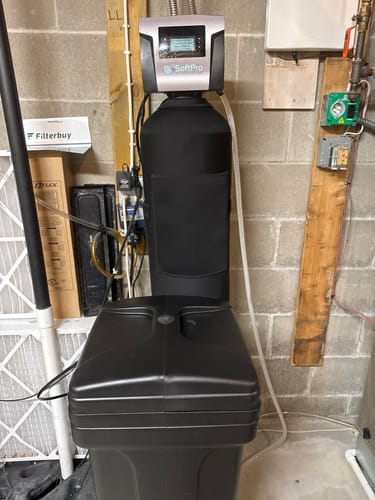
The SoftPro ECO stood out for several technical reasons. The high-capacity resin provides 48,000 grain capacity in a compact footprint. The digital Fleck 5600SXT control valve has proven reliability in the industry. Most importantly, the upflow regeneration design uses 50% less salt and water compared to traditional downflow systems.
Warranty coverage sealed the decision - a 10-year manufacturer warranty on the tank and a lifetime warranty on the control valve. That level of confidence suggested this wasn't a disposable appliance but a long-term investment in my home's infrastructure.
Unboxing and Initial Setup Experience
The delivery process exceeded my expectations. The unit arrived on a freight truck, properly secured on a pallet with corner protectors. The driver helped position it in my garage, which I appreciated given the 180-pound weight.
Unboxing revealed quality construction immediately apparent in the materials. The fiberglass tank has a substantial feel - not the thin plastic I'd seen on some budget models. The digital control head looked professional, with a clear LCD display and intuitive button layout.
Everything needed for installation was included: bypass valve, fittings, drain line tubing, and detailed instructions. The manual deserves special mention - actually useful, with clear diagrams and troubleshooting guidance rather than the typical confusing translations.
I spent an evening familiarizing myself with the control programming before installation. The Fleck 5600SXT allows extensive customization: regeneration timing, salt dosage, backwash duration, and rinse cycles. Having this level of control meant I could optimize performance for my specific water conditions.
The resin was pre-loaded and ready to go - no messy handling of media. A nice touch that simplified what could have been a complicated setup process.
Installation Day: Easier Than Expected

I chose professional installation despite my DIY inclinations, mainly because I wanted warranty protection and proper startup procedures. The installer from a local authorized dealer arrived with all necessary tools and materials.
The installation location required some planning. Water softeners need three connections: incoming hard water, outgoing soft water, and a drain for regeneration wastewater. We positioned it near my water heater in the basement, with easy access to the main water line and a floor drain.
The bypass valve installation was straightforward - cutting into the main line and installing the three-valve bypass system that allows maintenance without shutting off water to the entire house. Professional plumbing techniques ensured no leaks and clean, permanent connections.
Electrical requirements were minimal - just a standard 110V outlet for the control valve. No special wiring or dedicated circuits needed. The unit draws minimal power, primarily for the timer and valve motor during regeneration cycles.
Initial programming took about 30 minutes. We entered my water hardness level (15 gpg), household size (2 people), and iron content (minimal in city water). The system calculated optimal regeneration frequency - approximately every 8 days with our usage patterns.
The first regeneration cycle was fascinating to observe. The process takes about 90 minutes, cycling through backwash, brine draw, slow rinse, and fast rinse phases. The automated sequence removes accumulated hardness minerals from the resin and prepares it for another service cycle.
Within two hours of installation completion, I was testing soft water at every faucet. The transformation was immediate and noticeable.
Performance Testing: Real Numbers and Measurable Results
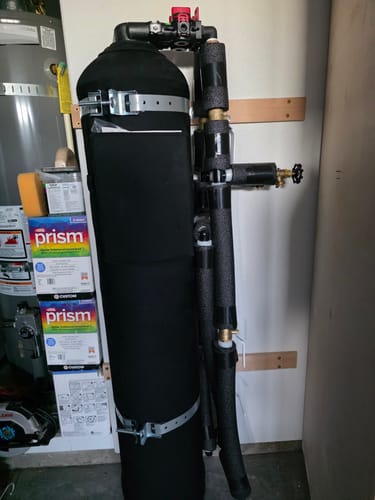
I'm a bit of a data nerd, so I documented everything with proper testing equipment. My baseline measurements showed incoming water at 15.2 gpg hardness with a pH of 7.4 and total dissolved solids (TDS) of 285 ppm.
Post-installation testing revealed the dramatic effectiveness of ion exchange technology. Softened water measured 0.5 gpg - essentially zero hardness. The slight residual reading is normal and indicates proper system operation without over-softening.
TDS levels dropped to 245 ppm, reflecting the removal of calcium and magnesium minerals and their replacement with sodium ions. For perspective, this sodium increase adds roughly 12.5 mg per 8-ounce glass - negligible for most people's dietary concerns.
I tested water quality consistency over several weeks, checking both immediately after regeneration and just before the next cycle. Performance remained stable throughout the service run, confirming the system's capacity calculations were accurate for my household.
Soap testing provided dramatic visual proof of effectiveness. With hard water, a standard soap solution remained cloudy even with vigorous mixing. Soft water created immediate, lasting suds with half the detergent amount. This translates to real cost savings on cleaning products throughout the house.
Flow rate measurements showed minimal pressure impact. At peak demand (shower and dishwasher simultaneously), I measured only a 2 PSI reduction from municipal supply pressure. The system's internal plumbing design maintains excellent flow characteristics.
Iron removal capabilities exceeded expectations. While city water contains minimal iron, the occasional trace amounts that create metallic tastes and slight staining disappeared completely. The ion exchange process handles multiple minerals simultaneously.
Daily Life Improvements: The Real-World Impact
The most immediate change was in the shower. That tight, dry feeling I'd grown accustomed to after bathing vanished within the first week. My skin felt naturally moisturized, and I could reduce lotion usage significantly. My hair became more manageable, with less frizz and better styling retention.
Coffee quality improved dramatically - the metallic undertone disappeared, replaced by the clean taste I remembered from quality restaurants. Even my husband, who claimed he couldn't taste the difference in water, noticed and commented on the improvement.
Cleaning became noticeably easier throughout the house. Soap scum buildup in the shower slowed to almost nothing, and what did accumulate wiped away effortlessly. Glassware emerged from the dishwasher spot-free without expensive rinse aids.
My plants responded positively to the softer water. The slight reduction in mineral content seemed to improve their uptake of nutrients, and I noticed better growth patterns in my houseplants within a month.
Laundry results exceeded my expectations. Colors stayed brighter longer, whites remained truly white, and fabric softness improved without changing detergent brands. I reduced detergent usage by about 30% while achieving better cleaning results.
The morning routine became more pleasant overall. That sticky film feeling on freshly washed hands disappeared. Brushing teeth with soft water felt cleaner, and even simple tasks like washing dishes became less tedious without constant spot removal.
Unexpected benefits emerged over time. My coffee maker stopped requiring monthly descaling treatments, and the water heater operates more efficiently without mineral buildup on heating elements. These appliance protection benefits provide long-term cost savings I hadn't fully calculated initially.
Operating Costs and Maintenance Reality
Ongoing operational expenses were a major consideration before purchase, so I've tracked every cost carefully over six months of operation.
Salt consumption averages 40 pounds monthly with our regeneration schedule. I purchase solar salt crystals in 40-pound bags for about $6 each at my local hardware store. This translates to approximately $6 monthly in consumables - far less than I spent on specialty detergents and descaling products previously.
Water usage during regeneration cycles totals about 25 gallons per cycle. With regeneration every 8 days, this adds roughly 115 gallons monthly to my water bill. At local utility rates ($8 per 1,000 gallons), the impact is minimal - less than $1 monthly.
Electricity consumption is negligible. The control valve draws power only during regeneration cycles and for the digital display, adding perhaps $2-3 annually to electric bills.
Maintenance requirements are refreshingly simple. Monthly tasks include checking salt level (takes 30 seconds) and ensuring the brine tank cleanliness (quick visual inspection). The system monitors itself and displays any service needs on the digital readout.
Annual maintenance involves cleaning the brine tank and checking system settings - tasks I can handle myself with basic tools. Professional service isn't required unless problems develop, unlike some water treatment systems requiring quarterly technician visits.
Total monthly operating cost averages $7-8, compared to my previous $25-30 monthly expenses on hard water mitigation products. The system pays for itself through reduced cleaning product usage and appliance protection benefits.
I calculated a complete return on investment within 3-4 years when factoring in appliance life extension, reduced cleaning supplies, and energy efficiency improvements from scale-free water heating.
Final Assessment: Six Months of Real Ownership
After six months of daily use, I can confidently say this water softener delivered on every promise and exceeded several expectations. The performance remains as consistent as day one, with no degradation in water quality or system reliability.
The initial concern about adding sodium to our water proved unfounded. The minimal increase is barely detectable by taste and falls well within recommended dietary guidelines for most people. Those with severe sodium restrictions should consult physicians, but for typical households, it's a non-issue.
Build quality continues to impress. The fiberglass tank shows no wear, the control valve operates smoothly, and all connections remain leak-free despite temperature fluctuations in our basement location. This feels like equipment built for decades of service, not planned obsolescence.
If I were making this decision again, I'd choose the same system without hesitation. The combination of proven technology, reliable performance, comprehensive warranty, and reasonable operating costs creates exceptional long-term value.
For Pennsylvania homeowners dealing with similar hard water challenges, particularly those on city water systems, this represents the most effective solution I've found. The investment transforms daily life quality while protecting expensive appliances and plumbing infrastructure.
My only regret is waiting so long to address the hard water problems. Those months of dealing with soap scum, dry skin, and appliance damage were completely unnecessary once I understood the available solutions.
The SoftPro ECO proves that sometimes the conventional approach - proven ion exchange technology with quality components - outperforms newer alternatives that promise miracle results without the established track record. Six months in, I'm a satisfied customer who would enthusiastically recommend this system to anyone facing similar water quality challenges.