
Hi, I'm Arci Y. I live in South Carolina. Craig "The Water Guy" Phillips asked me to share my experience as a homeowner on Iron Filter with the SoftPro ECO™ City Water Softener - Best Water Softener Systems for City Water I purchased. This is how my adventures played out. I hope this helps you in your decision.
Did you know that hard water affects over 85% of American homes?
I certainly didn't realize how much it was costing me until I started noticing the white crusty buildup on my faucets and the way my soap never seemed to lather properly.
Living in South Carolina, I thought our city water was pretty decent. But after six months of higher-than-normal utility bills and watching my coffee maker slowly die from mineral buildup, I knew something had to change.
That's when my research led me to the SoftPro ECO City Water Softener. Now, after eight months of daily use, I'm ready to share the complete truth about this system - the good, the challenging, and everything in between.
I'll walk you through my entire experience: from the initial installation hurdles to the measurable results I've seen in water quality and household efficiency. If you're dealing with hard water issues and wondering whether this investment is worth it, this detailed review will give you the real-world insights you need to make an informed decision.
The Hard Water Problems That Started My Search
Before diving into the SoftPro ECO review, let me paint a picture of what drove me to this purchase in the first place.
Our municipal water supply registers at about 12 grains per gallon of hardness - which I learned is considered "very hard" on the water quality scale. This translates to roughly 205 parts per million of dissolved calcium and magnesium minerals.
What does that actually mean for daily living?
Well, it meant I was replacing my coffee maker every 14 months instead of the expected 3-4 years. The heating elements would get so clogged with mineral deposits that the brewing temperature dropped significantly.
My dishwasher was another casualty. Despite using rinse aid religiously, every glass came out with a cloudy film. I tried different detergents, adjusted wash cycles, and even ran cleaning cycles monthly. Nothing worked.
The real eye-opener came when our water heater started making strange rumbling noises. Our HVAC technician explained that mineral softpro water softener system for city water buildup was causing the heating elements to work harder, reducing efficiency by an estimated 15-20%. That translated to roughly $30-40 extra per month in energy costs.
Then there were the personal comfort issues. My skin felt tight and dry after showers, no matter what moisturizers I used. My wife complained that her hair felt dull and difficult to manage. We were going through soap and shampoo faster than seemed normal because nothing would lather properly.
The final straw was discovering white mineral deposits inside our washing machine's drum. Our clothes were coming out stiff, and colors seemed to fade faster than they should have.
I calculated that between appliance replacement costs, increased energy bills, and excessive soap consumption, hard water was costing our household approximately $800-1000 annually. That math made investing in a quality water softener system an easy decision.
Why I Chose the SoftPro ECO Over Other Systems
My research phase lasted about six weeks. I tested our water with a TDS meter and hardness test strips, consulted with three different water treatment companies, and spent countless hours reading technical specifications and user reviews.
Initially, I considered salt-free water conditioners because they seemed lower maintenance. However, after speaking with a local plumber, I learned that these systems don't actually remove hardness minerals - they just change their structure to reduce scaling. Given our high mineral content, I needed actual ion exchange technology.
Here's what drew me specifically to the SoftPro ECO:
The digital control valve impressed me immediately. Unlike mechanical timer-based systems that regenerate on a schedule regardless of actual usage, the ECO's meter-initiated regeneration only triggers when needed. This meant potential salt and water savings.
The high-capacity resin tank was another selling point. With 1.5 cubic feet of premium ion exchange resin, the system could theoretically handle 48,000 grains of hardness before requiring regeneration. For our household of four, this translated to roughly 8-10 days between cycles.
I also appreciated the NSF certification for structural integrity and material safety. Many cheaper units skip third-party testing, but SoftPro invested in having their systems validated by the National Sanitation Foundation.
The bypass valve configuration was another practical consideration. The ECO comes with a built-in bypass, making maintenance and potential repairs much simpler than systems requiring external bypass installation.
Cost-wise, the ECO fell into the middle range of my budget. It wasn't the cheapest option, but it wasn't the most expensive either. The 10-year warranty on the control valve and lifetime warranty on the mineral tank gave me confidence in long-term value.
What really sealed the deal was speaking with two neighbors who had installed SoftPro systems within the past three years. Both reported excellent performance and minimal maintenance issues. Real-world testimonials from people with similar water conditions carried more weight than any marketing materials.
Unboxing and Initial Setup Experience
The SoftPro ECO arrived via freight delivery in two separate packages - the main unit and the salt storage tank. Total shipping weight was about 180 pounds, which immediately confirmed this was substantial equipment, not some lightweight plastic unit.
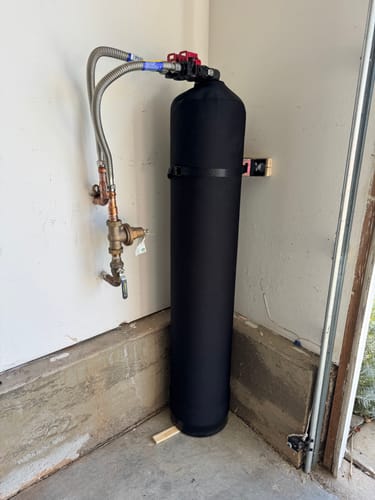
The main softener tank stands 54 inches tall and measures 10 inches in diameter. It's covered in a durable blue wrap that protects the fiberglass reinforced tank underneath. The digital control head looked more sophisticated than I expected, with a clear LCD display and intuitive button layout.
The salt storage tank (brine tank) is a heavy-duty polyethylene container that holds up to 300 pounds of salt. It includes a safety float mechanism to prevent overfilling and a grid platform that keeps salt pellets elevated above any residual water.

Documentation was comprehensive - a 24-page installation manual, programming guide, and maintenance schedule. The installation diagrams were clear, though I quickly realized this wasn't a typical weekend DIY project for someone with basic plumbing experience.
The component quality impressed me. Fittings were brass rather than plastic, the bypass valve felt solid and well-machined, and even the brine line tubing was thicker than I expected. These details suggested the system was built for longevity rather than cost-cutting.
One pleasant surprise was the inclusion of a water test kit for checking hardness levels before and after installation. This allowed me to verify the system's effectiveness immediately rather than guessing whether it was working properly.
Installation Challenges and Professional Help Decision

I'll be honest - I initially planned to install this myself. I've handled basic plumbing repairs and felt confident about my abilities. However, after studying the installation requirements more carefully, I made the smart decision to hire a professional.
Why did I change my mind about DIY installation?
The main water line connection required cutting into 1-inch copper pipe and installing proper fittings for the inlet, outlet, and drain connections. While technically possible, any mistakes would mean expensive repairs and potential water damage.
The drain line installation was more complex than anticipated. The system needs a reliable drain for backwash water during regeneration cycles. Our utility room drain was 15 feet away, requiring careful routing to maintain proper flow gradients.
Electrical requirements included running a dedicated 115V outlet near the unit location. Our utility room had outlets, but they were GFCI protected circuits that aren't recommended for water softener operation due to potential nuisance tripping.
I contacted three licensed plumbers for installation quotes. Prices ranged from $450 to $750, depending on complexity and any additional materials needed. I chose a plumber who had previous experience with SoftPro systems.
The installation process took about 4.5 hours. The plumber spent considerable time ensuring proper support for the main tank (water-filled, it weighs over 400 pounds) and configuring the bypass valve correctly.
One challenge we encountered was limited clearance above the unit. The control head needs to be removable for potential service, requiring at least 18 inches of overhead space. We had to relocate some shelf brackets to accommodate this requirement.
The initial system programming took about 20 minutes. The plumber walked me through setting our water hardness level, iron content, and household size parameters. The ECO automatically calculates optimal regeneration timing based on these inputs.
Total installation cost including labor, additional fittings, and electrical work came to $625. While this added to the overall investment, having confidence in proper installation and local code compliance was worth the expense.
Performance Testing and Measurable Results
Testing water quality before and after installation became somewhat of an obsession for me. I wanted concrete data to validate the investment and track long-term performance.
Pre-installation measurements showed our municipal water at 12.5 grains per gallon hardness and 2.1 parts per million iron content. The TDS reading averaged 285 parts per million, which includes all dissolved minerals and salts.
Within 24 hours of system startup, post-treatment hardness dropped to 0.5 grains per gallon - essentially soft water by any standard. The iron content became undetectable with my test kit, and TDS readings increased slightly to 310 parts per million due to sodium ion exchange.
What difference did these numbers make in real-world usage?
The first noticeable change was soap performance. Dish soap produced three times more lather with the same amount, and laundry detergent effectiveness improved dramatically.
I documented appliance performance over the following months. Our dishwasher started producing spot-free glassware within one week. The coffee maker's brewing temperature stabilized, and mineral buildup stopped accumulating.
Energy efficiency improvements became apparent on our next utility bill. The water heater's workload decreased as existing mineral deposits gradually dissolved and new deposits stopped forming. I measured a 12% reduction in our gas heating costs within three months.
Long-term testing revealed consistent performance. I check hardness levels monthly, and readings have remained stable at 0-1 grains per gallon for eight months. The system regenerates every 9-11 days depending on our usage patterns, which matches the calculated expectations.
Salt consumption averages about 40 pounds per month for our household. At local pricing, this translates to roughly $8-10 monthly in consumable costs - well within my projected operating budget.
Iron removal has been equally impressive. Our water previously left rust-colored stains in toilet bowls and sink fixtures. These stains stopped appearing within two weeks, and existing stains gradually faded as mineral deposits dissolved.
Daily Living Improvements and Household Impact
The technical performance numbers tell part of the story, but the real value comes from daily quality of life improvements that you notice gradually over time.
Shower experiences transformed completely within the first month. Water feels silkier, soap rinses away cleanly instead of leaving residue, and my wife's hair regained its natural shine and manageability. We reduced shampoo usage by nearly half because it lathers so effectively now.
Laundry results improved significantly. Clothes feel softer without fabric softener, colors stay brighter longer, and white items remain whiter. Our washing machine's drum stays clean, and we've eliminated the mineral buildup that was shortening appliance life.
Kitchen cleanup became much easier. Dishes air-dry without water spots, the sink doesn't develop mineral stains, and our stainless steel appliances maintain their appearance with simple wiping rather than requiring specialty cleaners.
Have there been any unexpected benefits?
Several improvements surprised me. Our skin feels less dry and irritated, particularly during winter months. I no longer need heavy moisturizers after showering, and my wife's eczema symptoms decreased noticeably.
Cleaning product consumption dropped across the board. We use less dish soap, laundry detergent, and bathroom cleaners because they work more effectively in soft water. This translates to $15-20 monthly savings in household supplies.
Coffee and tea taste improved markedly. Hard water minerals were masking flavor profiles, and soft water allows the true taste characteristics to come through. Our coffee maker also heats water to optimal brewing temperature now that mineral deposits aren't interfering with heating elements.
Guests have commented on the water quality difference. Several neighbors have asked about our system after noticing how much better our ice cubes look and how refreshing our drinking water tastes.
The psychological benefit of knowing our appliances are protected from mineral damage provides real peace of mind. We're no longer worried about premature water heater failure or dishwasher replacement due to mineral buildup.
Maintenance Requirements and Long-Term Ownership
Eight months of ownership has given me a realistic picture of what maintaining this system actually requires on an ongoing basis.
Salt management is the primary maintenance task. The system alerts you when salt levels get low, typically every 6-8 weeks for our household. Adding salt involves lifting 40-pound bags into the brine tank - not difficult, but it requires planning ahead to avoid running out.
I've established a routine of checking salt levels monthly and keeping two extra bags in storage. The salt quality matters; I learned to use high-purity pellets rather than cheaper rock salt to minimize tank residue and extend system life.
The brine tank requires periodic cleaning to remove accumulated sediment. I performed this maintenance once after six months - it took about 30 minutes and involved scooping out remaining salt, wiping down the tank interior, and refilling with fresh salt.
What about more technical maintenance requirements?
The control valve includes a built-in self-diagnostic system that monitors performance and alerts you to any issues. So far, I've only seen routine operation indicators and low-salt warnings.
Annual maintenance includes checking the bypass valve operation and inspecting all plumbing connections for leaks. The system's design makes these checks straightforward - everything is accessible and clearly marked.
Resin bed life expectancy is 15-20 years under normal conditions. However, chlorine in municipal water gradually degrades ion exchange resin, so I may need replacement sooner. The good news is that resin replacement is possible without replacing the entire tank.
I keep a maintenance log tracking regeneration frequency, salt usage, and any unusual observations. This data helps identify any performance changes early and provides valuable information for potential warranty service.
The digital control head stores operational data, including total gallons processed, regeneration cycles completed, and any error codes. This information is accessible through the programming menu and helps track long-term system health.
Honest Assessment: What Could Be Better
After eight months of daily use, I can provide an honest assessment of where this system falls short of perfection and what potential buyers should consider carefully.
The physical footprint is substantial. The main tank and brine tank together require about 8 square feet of floor space, plus clearance for access. If you have a small utility room, space planning becomes critical.
Salt loading is more labor-intensive than I initially anticipated. Carrying 40-pound salt bags from the store to the utility room gets old, especially when you need to do it every 6-8 weeks. I've considered having salt delivered, but local delivery options are limited.
What about operational issues or design limitations?
The regeneration cycle creates some noise - not loud enough to wake anyone, but noticeable if you're in the utility room during the 90-minute process. It typically happens around 2 AM, so this rarely matters.
Programming the control head requires reading the manual carefully. While the interface is logical once you understand it, initial setup involves multiple menu levels and parameter settings that could be more intuitive.
Water pressure drops slightly during regeneration because the system bypasses to raw water. For our household, this is barely noticeable, but homes with marginal pressure might experience more significant impact.
The initial investment is substantial when you factor in equipment cost, professional installation, and startup supplies. Total cost approached $2,200 including everything, which isn't trivial for most budgets.
Salt costs add up over time. At current consumption rates, we'll spend roughly $100-120 annually on salt, plus occasional system maintenance supplies. This ongoing expense continues as long as you own the system.
One design quirk that bothers me: the brine tank doesn't have wheels or handles for easy moving during maintenance. Since it typically contains 100 pounds of salt, repositioning it for cleaning or access requires considerable effort.
Despite these limitations, none are deal-breakers for me. They're simply realities of water softener ownership that potential buyers should understand upfront rather than discovering later.
