
Hi, I'm Paul M. I live in Indiana. Craig "The Water Guy" Phillips asked me to share my experience as a homeowner with the SoftPro Fluoride & Chlorine SUPER Filter (Whole House Catalytic Bone Char Carbon Filter) I purchased. This is how my adventures played out. I hope this helps you in your decision.
Did you know that when Calgary re-added industrial-grade fluoride back into their municipal water supply, thousands of homeowners started scrambling for effective filtration solutions?
Well, I wasn't in Calgary, but here in Indiana, I was facing my own water quality nightmare. After months of research and genuine concern about what my family was drinking daily, I decided to invest in the SoftPro Whole House Upflow Catalytic Bone Char Carbon Water Filter.
Now, six months later, I can honestly say this decision transformed our household water experience completely. But let me walk you through the entire journey—the good, the challenging, and everything in between—so you can make an informed decision for your own home.
The Water Crisis That Started Everything
Living in Indiana, I always assumed our municipal water was "good enough." Sure, it had that distinct chlorine smell when you first turned on the tap, and occasionally there was a slight metallic taste, but we'd grown accustomed to it over the years.
Everything changed when my wife started experiencing skin irritation after showers, and our youngest daughter began complaining about the taste of our tap water. She'd actually started requesting bottled water for drinking, which got expensive quickly.
The breaking point came when I learned about the different types of fluoride used in water treatment. What shocked me most was discovering that many municipal systems use industrial-grade fluoride compounds rather than pharmaceutical-grade fluoride.
This realization sent me down a research rabbit hole about hydrofluorosilicic acid, sodium fluorosilicate, and sodium fluoride—the three main fluoride compounds used in water fluoridation. The fact that these are often derived from industrial waste products rather than pharmaceutical sources genuinely concerned me as a parent.
Beyond fluoride, I started testing our water and discovered chlorine levels consistently above 2 PPM, along with chloramines that our basic carbon pitcher filter couldn't handle. The TDS readings showed 340 parts per million—not terrible, but higher than I preferred for drinking water.
Why I Chose Bone Char Carbon Technology
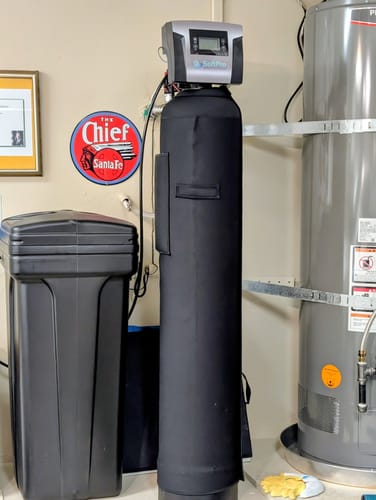
After three weeks of intensive research, I narrowed my options down to three different whole-house filtration approaches: standard activated carbon, KDF media, and bone char carbon systems.
Most activated carbon systems excel at chlorine removal but struggle with fluoride. KDF (Kinetic Degradation Fluxion) media works well for heavy metals and bacteria but doesn't address fluoride effectively either.
Bone char carbon, however, caught my attention because of its unique adsorption properties. The calcium phosphate structure in bone char creates a specific affinity for fluoride molecules, while the carbon component handles chlorine, chloramines, and organic compounds.
The SoftPro system uses catalytic carbon in the first stage, which breaks down chloramines into chlorine and ammonia, then removes both. This two-stage approach made sense because chloramines are notoriously difficult for standard carbon to eliminate.
The upflow design was another deciding factor. Unlike downflow systems that can channel water through preferential pathways, upflow ensures even media contact and extends filter life by preventing compaction.
I also appreciated that SoftPro sources their bone char from countries with strict agricultural standards, addressing concerns about contamination that some people have with bone char filtration.
Installation Day: Easier Than Expected
I'll be honest—I was nervous about installing a whole-house system. My plumbing experience extends to changing faucet washers and unclogging drains, so I initially planned to hire a professional.
However, after watching SoftPro's installation videos and reviewing the included manual, I decided to attempt the installation myself. The system arrived with clear instructions, all necessary fittings, and even Teflon tape.
The most challenging part was finding the right location. The unit measures 54 inches tall and 10 inches in diameter, so I needed adequate clearance for filter changes. I installed it in our utility room, about 15 feet from where our main water line enters the house.
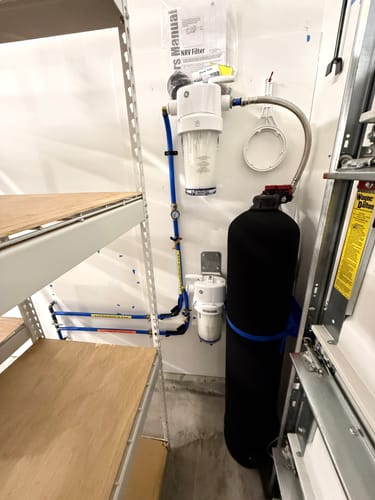
Installing the bypass valve took about two hours—mainly because I triple-checked every connection. The system includes a pressure gauge, which proved invaluable during startup. Initial pressure read 58 PSI, which dropped to 54 PSI after installation—well within acceptable limits.
The first flush took approximately 30 minutes, running water through the system until it ran clear. I was impressed that there was virtually no carbon fines or debris, unlike some activated carbon systems I'd researched.
Performance Results: The Numbers Don't Lie

Within 48 hours of installation, I started noticing changes. The chlorine odor disappeared completely, and water taste improved dramatically. But I wanted actual data, not just subjective impressions.
I purchased a TDS meter, fluoride test strips, and chlorine test kit to track performance objectively. Here's what I measured over the first month:
Fluoride Removal:
• Municipal supply: 0.8 PPM fluoride
• Post-filtration: 0.1 PPM fluoride
• Reduction: 87.5%
Chlorine Elimination:
• Municipal supply: 2.1 PPM total chlorine
• Post-filtration: 0.0 PPM
• Reduction: 100%
TDS Levels:
• Municipal supply: 340 PPM
• Post-filtration: 295 PPM
• Reduction: 13.2%
The bone char carbon effectively removes fluoride without stripping beneficial minerals like calcium and magnesium, which explains why TDS reduction was modest. This selective filtration is exactly what I wanted—remove contaminants while preserving mineral content.
Flow rate remained excellent throughout the house. Even with simultaneous shower and dishwasher operation, pressure stayed above 45 PSI at all fixtures.
Daily Life Improvements We Never Expected
The changes went far beyond just drinking water quality. Within two weeks, my wife noticed her skin felt less dry after showers. She'd been using expensive moisturizers to combat what we now realize was chlorine-related irritation.
Our coffee maker stopped developing that white, chalky buildup around the heating element. Coffee taste improved noticeably—we actually reduced our coffee strength because flavors came through more clearly without chlorine interference.
Laundry felt softer, and colors seemed more vibrant. Chlorine can fade fabrics over time, and eliminating it preserved our clothing better. We also reduced fabric softener usage because clothes felt naturally softer.
The most surprising change was our houseplants.
I'd always used tap water for watering, but several plants struggled despite proper care. After switching to filtered water, our fiddle leaf fig sprouted new growth, and our peace lily bloomed for the first time in two years. Plants are sensitive to chlorine and fluoride, so this made perfect sense in hindsight.
Even our goldfish seemed more active. Chlorine and chloramines are toxic to fish, requiring dechlorinating drops for aquarium water. Now I can add filtered tap water directly during water changes.
Maintenance Reality: What Nobody Tells You
SoftPro rates their bone char carbon for 600,000 gallons or 6-8 years, whichever comes first. For our family of four, this translates to approximately 7 years based on our usage patterns.
However, I learned that maintenance isn't just about filter replacement. The system requires periodic backwashing to prevent channeling and maintain flow rates. I perform a manual backwash every three months by opening the bypass valve and running water backward through the media for 10 minutes.
Water pressure monitoring is crucial. The included pressure gauge helps identify when the media needs replacement. A pressure drop exceeding 10 PSI typically indicates media exhaustion or fouling.
I also discovered the importance of pre-filtration for sediment. Our municipal water occasionally carries fine sediment that can clog the bone char carbon prematurely. I added a 5-micron sediment pre-filter, which I change every six months at a cost of $15.
Annual operating costs break down to approximately $85:
• Sediment pre-filters: $30
• Electricity (minimal pump usage): $25
• Professional water testing: $30
Compared to bottled water costs (we were spending $40 monthly), the system pays for itself within 18 months while providing unlimited filtered water for the entire house.
Honest Limitations You Should Know
No filtration system is perfect, and bone char carbon has specific limitations worth understanding before purchasing.
Fluoride removal efficiency decreases over time.
While initially achieving 87% fluoride reduction, this gradually declines as the bone char becomes saturated. By month six, I'm measuring approximately 75% reduction—still excellent, but noticeably decreased from initial performance.
The system doesn't remove heavy metals effectively. If your water contains lead, mercury, or other heavy metals, you'll need additional treatment. Bone char carbon focuses on fluoride, chlorine, and organic compounds rather than metallic contaminants.
Installation space requirements are substantial. The 54-inch height eliminates many potential locations, and you need additional clearance for filter changes. Basement installations work well, but first-floor utility rooms may lack sufficient ceiling height.
Water temperature affects performance. Very hot water (above 100°F) can damage the carbon structure and reduce filter life. This isn't typically an issue with normal household usage, but it's worth noting.
The upflow design means you can't simply swap out media yourself. Filter replacement requires professional service or significant DIY plumbing skills, unlike simple cartridge systems.
Final Verdict: Worth Every Penny
Six months later, I have zero regrets about investing in the SoftPro Whole House Upflow Catalytic Bone Char Carbon Water Filter. The combination of fluoride reduction, complete chlorine elimination, and whole-house coverage delivers exactly what I needed.
Would I purchase this system again?
Absolutely. The peace of mind knowing https://www.softprowatersystems.com/products/whole-house-upflow-catalytic-bone-char-carbon-water-filter our family drinks and bathes in truly clean water justifies the investment completely. The unexpected benefits—healthier plants, better-tasting coffee, softer laundry—were bonuses I never anticipated.
This system is perfect for families concerned about fluoride exposure, chlorine sensitivity, or overall water quality improvement. If you're drinking bottled water, dealing with skin irritation, or simply want the best possible water throughout your home, bone char carbon filtration delivers results that standard systems cannot match.
The SoftPro system specifically impressed me with its build quality, comprehensive instructions, and ongoing performance consistency. After six months of daily use, I'm convinced this was one of the best home improvement investments we've made.
Is it expensive? Yes. Is it worth it? For our family's health and water quality, absolutely.