
Hello there! I'm Wayne W. from Minnesota, and Craig "The Water Guy" Phillips reached out asking if I'd share my real-world experience with the SoftPro Fluoride & Chlorine SUPER Filter (Whole House Catalytic Bone Char Carbon Filter) that I installed in my home. This is my honest take on how everything went down, and I'm hoping my journey might help you figure out if this system is right for your situation.
The Water Problems That Started It All
Living in Minnesota, I thought our water was pretty decent compared to what I'd heard about other states. Boy, was I wrong. The wake-up call came during a particularly busy morning when I was making coffee for a work meeting at home.
The taste hit me immediately – that distinct chlorine flavor that reminded me of swimming pool water. How had I been drinking this for years without really noticing?
It was one of those moments where you can't unsee (or untaste) something once you're aware of it.
But the taste was just the tip of the iceberg. My wife had been complaining about dry skin after showers for months, and our teenage daughter kept asking why her hair felt "weird" after washing it. I'd dismissed these as typical complaints, but now I was starting to connect the dots.
The real eye-opener came when I started researching municipal water treatment in our area. Did you know that fluoride levels in many municipal systems can exceed what's optimal for adult consumption?
While fluoride serves a purpose in dental health, especially for children, I learned that many families prefer to control their fluoride intake rather than consuming it in every glass of water, cup of coffee, or home-cooked meal.
Our local water report showed chlorine levels that were within EPA guidelines but still high enough to affect taste and potentially impact our skin and hair. The chlorine was doing its job of disinfecting the water supply, but it wasn't doing our daily experience any favors.
I started calculating how much we were spending on bottled water just for drinking – roughly $40 per month. That didn't even account for the plastic waste or the inconvenience of constantly restocking. Something had to change.
Research Phase: Learning About Whole House Filtration
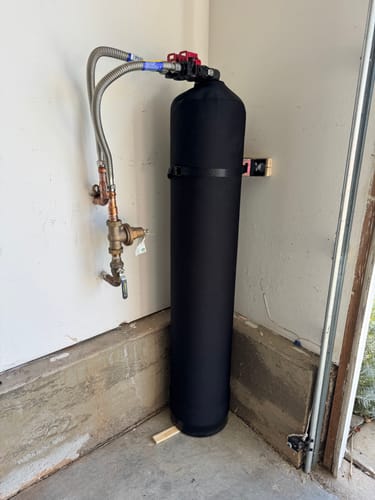
Like most homeowners facing a significant purchase, I dove deep into research mode. I spent weeks reading about different filtration technologies, trying to understand the difference between point-of-use and whole house systems.
Initially, I considered just getting an under-sink filter for drinking water. But the more I learned, the more I realized that approach would only solve part of our problem. We'd still be showering in chlorinated water, and cooking would still involve the same treated municipal supply.
The concept of whole house filtration made sense, but the technology options were overwhelming. Carbon block filters, granular activated carbon, reverse osmosis systems, salt-based water softeners – each seemed to address different issues.
That's when I discovered the difference between regular carbon filtration and catalytic carbon. Standard activated carbon works through adsorption, trapping contaminants in its porous structure. Catalytic carbon takes this further by SoftPro Fluoride Filtration actually converting chloramines (combined chlorine) into harmless compounds rather than just filtering them out.
This distinction became crucial when I learned that our municipal system uses chloramines for disinfection, not just basic chlorine. Many standard carbon filters struggle with chloramines, but catalytic carbon is specifically designed to handle them effectively.
The bone char component was another learning curve. Bone char carbon has a unique affinity for fluoride that regular activated carbon lacks. It's made from charred animal bones and has been used for centuries in various purification applications. For someone specifically concerned about fluoride reduction, this seemed like the targeted approach I needed.
Sizing the system properly was another consideration. Our household of four uses approximately 300 gallons per day between showers, laundry, dishwashing, and general use. I needed a system that could handle peak flow rates without creating pressure drops that would affect our daily routines.
Why I Chose the SoftPro Catalytic Bone Char System
After comparing systems from several manufacturers, the SoftPro Fluoride & Chlorine SUPER Filter stood out for several specific reasons that aligned with my research findings.
First, the dual-media approach made scientific sense. The catalytic carbon would handle chlorine and chloramines effectively, while the bone char would target fluoride specifically. This wasn't just throwing multiple media types together hoping something would work – it was an engineered approach to addressing distinct contaminant categories.
The system's flow rate specifications impressed me. At 15 GPM service flow rate, it could handle our household's peak usage without compromising performance. I'd read horror stories about whole house filters that worked great until someone tried to run the dishwasher and shower simultaneously.
Build quality was evident from the specifications. The 1054 control valve is a reliable Fleck unit that's been proven in thousands of installations. The mineral tank construction and internal components suggested this was built for long-term performance, not just initial impressions.
The backwash capability sealed the deal for me. Unlike simple carbon block systems that need complete replacement when saturated, this system periodically backwashes the media to extend its life and maintain performance. This translated to lower long-term operating costs and more consistent filtration quality.
I also appreciated the company's technical support reputation. Water treatment can get complex, and I wanted to know that help was available if I encountered issues during installation or operation.
Unboxing and Initial Impressions

The system arrived on a freight truck, which should have prepared me for the size, but it's still impressive to see a whole house filtration system in person. The packaging was professional-grade with plenty of protection for the control valve and tank components.
First impression: this is serious equipment. The mineral tank is substantial – not the lightweight plastic I half-expected, but heavy-duty fiberglass that feels like it could last decades. The control valve looked exactly like the commercial units I'd seen in online videos.
Everything was included that I needed for a basic installation: bypass valve assembly, drain line fittings, and comprehensive documentation. The installation manual was refreshingly clear, with actual diagrams rather than generic illustrations that leave you guessing about specifics.
I did notice the media bags – both the catalytic carbon and bone char came separately for loading during installation. This initially concerned me since I'd assumed everything would come pre-loaded, but I learned this actually ensures the media is fresh and properly distributed during setup.
The weight became apparent when moving everything to my utility room. The empty tank was manageable, but I could tell that once loaded with media and operating, this would be a permanent installation. Good thing I'd planned the location carefully.
Installation Experience and Setup Process
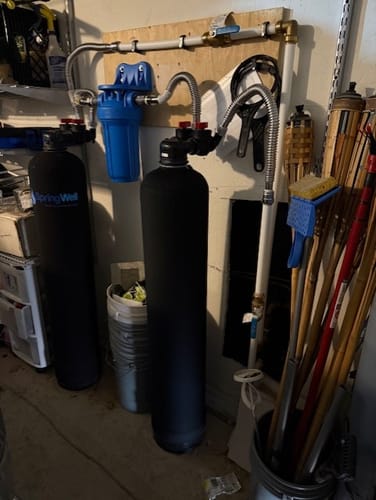
I'll be honest – I considered hiring a plumber for this installation. The intimidation factor is real when you're looking at tapping into your main water line. But the cost estimates I received ($300-500 just for installation) motivated me to tackle it myself.
The actual installation took most of a Saturday, but that included several trips to the hardware store for fittings I hadn't anticipated. The main water line connection required shutting off water to the house, which added pressure to work efficiently.
Loading the media was straightforward but messy. The catalytic carbon went in first, followed by the bone char. The key is taking your time to avoid media dust getting into the control valve – something the manual emphasizes repeatedly for good reason.
The initial backwash and rinse cycles took longer than expected – about 45 minutes total. But this is crucial for removing any media fines and ensuring the system operates cleanly from day one. Want to know the most satisfying moment of the entire installation?
Watching that final rinse water run completely clear after starting out looking like chocolate milk.
Programming the control valve was surprisingly intuitive. The manual provides default settings for the media combination, but I appreciated being able to adjust regeneration frequency based on our actual water usage patterns.
First water test came that evening when my wife made her usual herbal tea. The difference was immediately noticeable – no chlorine taste whatsoever, and the overall water character was noticeably "softer" on the palate.
Performance Results After Six Months of Use
The real test of any water treatment system isn't the first day – it's consistent performance over time. After six months of daily use, I can share some honest observations about how this system has performed in real-world conditions.
The most obvious change has been taste and odor elimination. That swimming pool chlorine smell that used to hit me when filling a glass is completely gone. Coffee tastes noticeably better – enough that guests have commented without prompting. My wife's tea routine has become a daily reminder of the difference, since herbal teas are particularly sensitive to water quality.
Shower and bathing improvements were more gradual but equally real. The dry skin issues my wife experienced have largely resolved. Our daughter's hair complaints disappeared within the first month. I've noticed that soap seems to rinse cleaner, leaving skin feeling less filmy after showers.
I've been testing the water periodically with home test kits to monitor performance. Total chlorine readings consistently show undetectable levels post-filtration, compared to 1.2-1.5 ppm from our municipal supply. The fluoride test strips show significant reduction, though exact measurement is challenging with consumer-grade testing equipment.
Flow rate has remained consistent throughout the evaluation period. Even during peak usage times – morning showers combined with dishwasher or laundry – I haven't noticed any pressure drops that affect normal activities.
The system has automatically regenerated every 8-10 days based on our usage patterns. Each backwash cycle uses approximately 150 gallons over 45 minutes, which I monitor since we're on a well pump. The timing is adjustable, and I've set it to occur during low-usage periods (3 AM).
One unexpected benefit has been the elimination of our bottled water purchases. We've saved approximately $240 in bottled water costs over the six-month period, plus the environmental benefit of eliminating those plastic bottles.
Maintenance Reality and Long-Term Ownership
Anyone considering a whole house filtration system needs to understand the maintenance commitment. This isn't a "set it and forget it" appliance, though the requirements are more manageable than I initially feared.
The most frequent maintenance is adding salt to the brine tank for regeneration cycles. I use about 50 pounds of salt every 6-8 weeks, depending on usage. This is standard water softener salt available at any hardware store for roughly $6 per bag.
I've developed a routine of checking the system weekly during my general house maintenance. This involves verifying the salt level, checking for any leaks around fittings, and noting the regeneration frequency on the control valve display.
The media will eventually need replacement – catalytic carbon typically lasts 3-5 years, while bone char can extend to 5-7 years depending on fluoride levels and usage volume. At current replacement costs, I'm budgeting approximately $400 every 4-5 years for media replacement.
The control valve has performed flawlessly so far. These Fleck units are known for reliability, and many installations run 10-15 years without major service requirements. Basic maintenance involves periodic cleaning of the brine tank and ensuring proper programming settings.
Winter operation in Minnesota hasn't presented any issues. The system is installed in my heated utility room, so freezing isn't a concern. I did learn to be more mindful of regeneration timing during extremely cold periods when our water usage patterns change.
Documentation and record-keeping have become part of my routine. I track regeneration frequency, salt usage, and any performance observations in a simple log. This helps identify any changes in system performance and provides valuable information if service is ever needed.
Final Assessment and Recommendations
After six months of daily use, I'm confident this was the right choice for our household's water quality concerns. The combination of catalytic carbon and bone char has delivered on the specific issues that motivated this purchase – chlorine taste and odor elimination, plus fluoride reduction.
The system has proven reliable and consistent in performance. Water quality improvements are noticeable daily, and the whole house approach means every faucet, shower, and appliance benefits from filtered water. This comprehensive approach justified the investment compared to point-of-use alternatives.
Cost-wise, the initial investment of approximately $1,200 (including installation supplies) is paying dividends through elimination of bottled water purchases and improved daily water experience. The ongoing operating costs are reasonable – about $15-20 monthly in salt and utilities for backwash cycles.
This system is ideal for households with municipal water supplies that use chloramines for disinfection and families interested in reducing fluoride intake. Are you dealing with chlorine taste and odor issues that affect drinking water and shower experiences?
This addresses both comprehensively.
However, this isn't the right solution for every situation. If your primary concerns are hardness minerals (calcium and magnesium), a traditional water softener would be more appropriate. For bacterial contamination or heavy metals, different treatment approaches would be necessary.
Installation does require basic plumbing skills and comfort working with your home's water system. Professional installation is always an option, though it adds significantly to the total cost.
Overall, I'm satisfied with this purchase and would recommend it to families facing similar water quality issues. The engineering is sound, performance has been consistent, and the daily improvement in water quality makes this one of those home improvements that provides ongoing satisfaction rather than just initial excitement.
Just remember to flush the charcoal first during installation – that initial backwash cycle is crucial for optimal performance from day one.